Email: SalesDept@topcomponents.cc

Skype: jinda808@vip.163.com

QQ: 119294586

WeChat: 

WhatsApp: +8613027986268
Language Translation
- • English
- • Русский язык
* Please refer to the English Version as our Official Version.
* Please refer to the English Version as our Official Version.
On December 11, 2025, Da Da Da Lian Holdings, a leading international semiconductor component distributor dedicated to the Asia Pacific market, announced that its subsidiary Quanding has launched a global navigation satellite system (GNSS) chip solution based on Synaptics products.
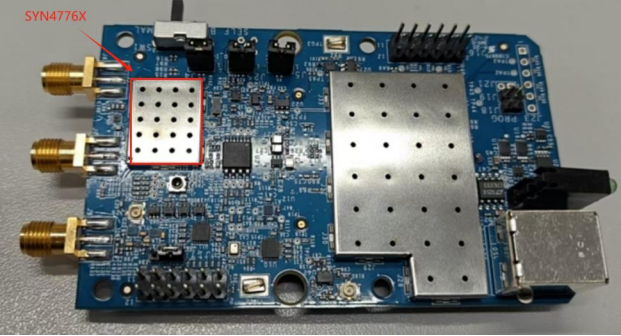
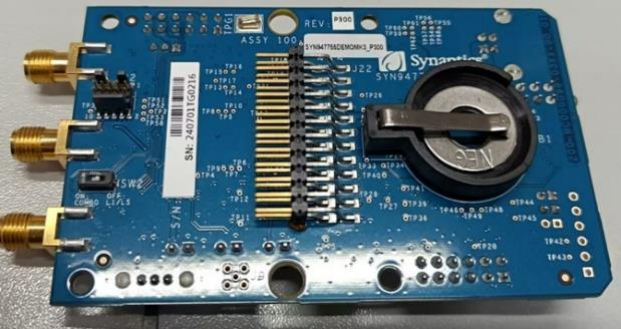
Figure 1- Display Board of the Global Navigation Satellite System (GNSS) Chip Solution Based on Synaptics Products by DaDaDaDaDaDaDaDaDaQuan Ding
In high-precision applications such as navigation and surveying, the core requirement is to achieve stable and reliable centimeter level positioning in complex environments, while balancing device endurance and integration efficiency. The industry is facing challenges such as signal obstruction in urban canyons and multipath interference, while also meeting the requirements of equipment miniaturization and rapid market launch. The Synaptics GNSS chip solution launched by DaDaDaDaDaDaDaDaQuan Ding can effectively address the above challenges while simplifying system design.
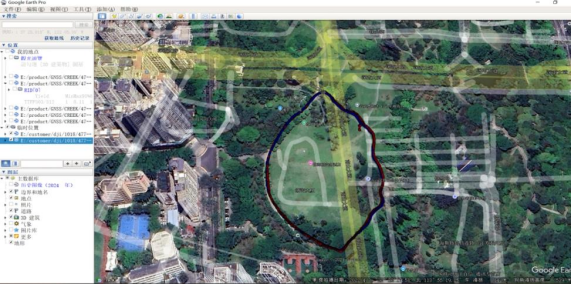
Figure 2- Scene Application Diagram of the Global Navigation Satellite System (GNSS) Chip Solution Based on Synaptics Products by DaDa DaDa Quan Ding
The Synaptics GNSS chip is a highly integrated global navigation satellite system receiver and processing chip. It captures and solves signals from multiple orbiting satellites to accurately calculate real-time position, velocity, and time information of user devices. It is the core engine driving modern navigation, surveying, mobile communication, and other fields to achieve precise positioning functions.
To meet the differentiated performance and cost requirements of different wearable devices, the solution provides two preferred models: SYN47762 for single frequency L1 and SYN47768 for dual frequency L1+L5. Both chips are based on a 28 nanometer process, with the advantages of small size and low power consumption, and integrate 1MB ROM and sensor hub functions, achieving single-chip integration of multi chip synergy benefits. They are fully compatible with mainstream global navigation systems such as GPS, GLONASS, Beidou, Galileo, ensuring reliable satellite coverage and positioning services in any region.
The SYN47768 chip, with its comprehensive support for L1+L5 dual frequency bands, can still achieve excellent positioning accuracy in complex environments, making it particularly suitable for applications with strict requirements for positioning accuracy. Its integrated hardware acceleration engine and intelligent anti-interference algorithm can quickly capture and stably track satellites in weak signal environments, significantly improving the success rate and continuity of positioning. Combined with its optimized low-power architecture and energy management technology, it can significantly extend battery life and meet the long-term usage needs of wearable devices.
SYN47762 adopts a dual core architecture (Cortex-M4/M0), and the positioning algorithm runs entirely inside the chip. It has low requirements for the main processor and is suitable for mainstream precision wearable products that pursue low power consumption and low cost. SYN47768 is equipped with a Cortex-M4 core and a large-scale parallel search engine, achieving higher positioning accuracy with dual frequency reception capability, targeting professional and high-end consumer wearable devices.
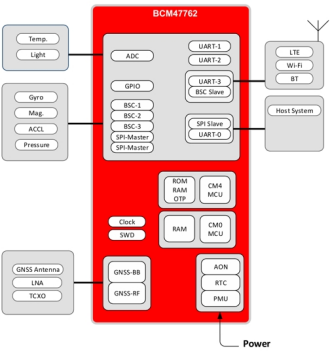
Figure 3- Block diagram of the Global Navigation Satellite System (GNSS) chip solution based on Synaptics products by DaDa DaDa Quan Ding
The solution based on Synaptics GNSS chip provides powerful, reliable and easy to develop solutions for various positioning applications through its high precision, low power consumption, high integration and global compatibility, directly addressing and solving the core challenges of the industry in terms of accuracy, range and reliability.
Core technological advantages:
Exclusive LTO Service: Synaptics offers their own Long Term Orbits (LTO) service, while other brands purchase third-party services
Having a globally self built satellite receiving station system, with controllable raw data;
Based on real-time ephemeris data, it can provide up to 7 days of full galaxy prediction data;
Competitors of Xiangxiao use third-party data with a 24-hour delay, which is more timely and accurate.
Less peripheral components: PCB layout occupies a small area (can save 50% of circuit space compared to competitors), which can be applied to smaller products;
Low power consumption: With a power consumption of only 10-20mW, it has significant energy-saving effects;
High precision positioning: Accurate positioning without offset, stable and reliable trajectory map;
Good compatibility: The chip does not choose the main controller, only needs to support UART or SPI interfaces;
Multi brand verification: It has been adopted by multiple well-known big brands, such as Apple Watch, Xiaomi Watch, OPPO Watch, etc., and its stability and reliability have been widely recognized.
Scheme specifications:
Supporting data interface types: SDIO and PCIE;
Supported peripheral interfaces: SPI, UART, GPIO;
Up to 49 programmable GPIO;
1MB ROM;
Manufacturing process: 28nm;
Chip applications: smartphones, tablets, mobile accessories, wearable devices, digital cameras.
About The Author
This is reported by Top Components, a leading supplier of electronic components in the semiconductor industry
They are committed to providing customers around the world with the most necessary, outdated, licensed, and hard-to-find parts.
Media Relations
Name: John Chen
Email: salesdept@topcomponents.ru