Email: SalesDept@topcomponents.cc

Skype: jinda808@vip.163.com

QQ: 119294586

WeChat: 

WhatsApp: +8613027986268
Language Translation
- • English
- • Русский язык
* Please refer to the English Version as our Official Version.
* Please refer to the English Version as our Official Version.
With the development of artificial intelligence algorithms, especially the breakthrough progress of multimodal large model technology, it will significantly accelerate the development of the robotics industry. Not only can it enhance the intelligence level of robots, but it also quickly promotes the process of humanoid robots entering mass production. Onsemi provides comprehensive solutions for embodied intelligent robots, AMRs, etc., promoting new breakthroughs in robot intelligence.
Embodied intelligence penetrates into multiple scenarios
Ansenmei provides key sensing and power products for robot applications, such as the HyperluxTM series image sensors (including high-resolution iToF depth imaging solutions for robot vision systems), as well as innovative MOSFET technology and intelligent electronic fuses that enable advanced motor control.
Theo Kersjes, System Engineering Manager at Ansenmei, believes that 2025 marks the beginning of the transition from technology validation to specific emerging application scenarios. Although mass production of embodied intelligent robots will still take several years, this is precisely the beginning of the development of robot technology towards higher levels and capabilities, and the large-scale penetration into more application scenarios.

Theo Kersje, System Engineering Manager at Ansenmei
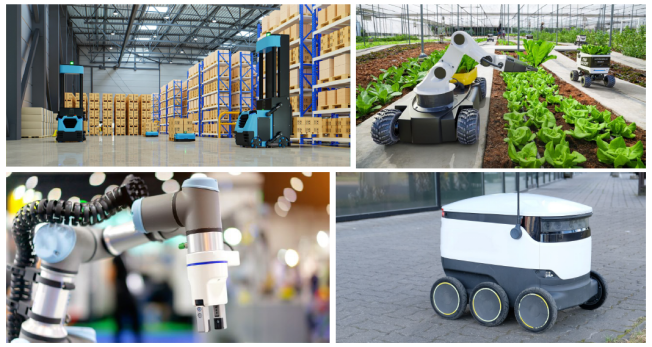
Regarding the application challenges of robots, Theo Kersjes further explained, "Initially, robots were fixed industrial machines that performed repetitive tasks, but now they have evolved into intelligent systems that can move in the physical world and have real-time perception capabilities. These robots leave controlled spaces and play a role in fields such as logistics, healthcare, agriculture, retail, and security, so they must be able to work safely in collaboration with humans. One of the technical challenges is to ensure safety under all conditions
Ultimately, the implementation of all robot application scenarios relies on the integration of artificial intelligence and advanced perception and control technologies. Ansenmei provides intelligent sensing and power solutions. By integrating inductive position sensing, safe and responsive human-machine interaction can be achieved. Meanwhile, as a supplier offering multiple sensor solutions, Ansenmei can provide high-resolution image sensors required by robots, as well as cost-effective ultrasonic sensors that support bottom detection of robots.
Core Link Layout, Analysis of Ansenmei's Tailored Intelligent Solution
Ansenmei provides comprehensive and detailed system solution guidelines for robot subsystems, covering the following areas:
Sensors (image sensor, ultrasonic sensor, inductive position sensor, pressure sensor, LiDAR, Bluetooth low-power BLE 5.2 AoA/AoD)
Wired communication (CAN, 10BASE-T1S)
Power distribution
Motor drive
Battery charging
LED signal light
image.png
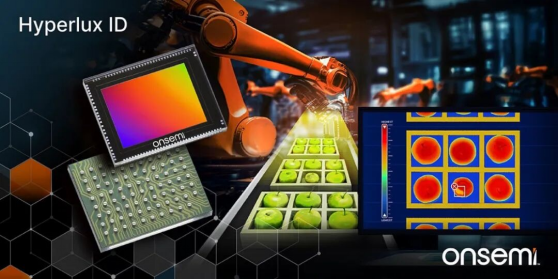
A key challenge for embodied robots is depth perception. In the first quarter of this year, Anson Mei launched the Hyperlux ID series sensor, which uses Indirect Time of Flight technology to solve the problem of motion artifacts. It can achieve high-sensitivity detection, output accurate perception results, with a resolution of up to 1.2 million pixels and a depth of 1 millimeter.
This depth perception capability is enabling end effectors (also known as robotic arm end tools/EOATs) to perform increasingly precise operational tasks.
In addition, stereo vision cameras using Hyperlux SG series 1 million/2 million pixel sensors are also suitable for depth perception scenes and are an alternative to indirect time-of-flight (iToF) technology.
In addition, the rolling shutter image sensor family (including the ultra-low power Hyperlux LP series and the high dynamic range Hyperlux LH series) is also suitable for object detection and obstacle avoidance.
In the field of robot applications, Ansenmei's differentiated competitive advantage is its inductive position sensor technology. Its flagship product NCS32100, as an absolute rotary encoder, leads the industry in accuracy when measuring single/multi turn motion. It can accurately capture parameters such as position, direction, speed, and rotation count, with an accuracy of up to ± 50 arcseconds. Compared to optical encoders, inductive encoders have extremely strong anti-interference capabilities and are not easily affected by vibrations, dust, water stains, oil stains, or metal debris; Compared to magnetic encoders, this scheme not only significantly reduces component costs and quantities, but also completely avoids dependence on rare earth metals.
About The Author
This is reported by Top Components, a leading supplier of electronic components in the semiconductor industry
They are committed to providing customers around the world with the most necessary, outdated, licensed, and hard-to-find parts.
Media Relations
Name: John Chen
Email: salesdept@topcomponents.ru
This is reported by Top Components, a leading supplier of electronic components in the semiconductor industry. They are committed to p with the most necessary, outdated, licensed, and hard-to-find parts.
Media Relations Name: John Chen
Email: salesdept@topcomponents.ru