Email: SalesDept@topcomponents.cc

Skype: jinda808@vip.163.com

QQ: 119294586

WeChat: 

WhatsApp: +8613027986268
Language Translation
- • English
- • Русский язык
* Please refer to the English Version as our Official Version.
* Please refer to the English Version as our Official Version.
Industrial equipment is transitioning towards electrification, and there is an urgent need for robust, reliable, and efficient battery charging solutions. From electric tools to heavy machinery, their chargers must be able to adapt to harsh environments and different power sources (120-480 Vac), and prioritize miniaturization, lightweight, and natural convection heat dissipation in their design. This article aims to provide guidance for engineers in designing such critical systems, with a focus on topology selection and device selection, especially the disruptive silicon carbide (SiC) MOSFET.
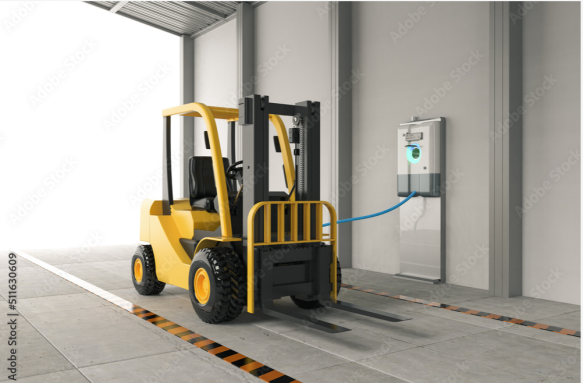
Modern industrial charging system
battery chargers need to support multiple types of chemical batteries, which is a challenge. Lithium ion batteries, especially those in the range of 12V-120V, have become the mainstream choice for industrial applications (Figure 1), driving everything from handheld tools to material handling equipment.
A typical industrial charger architecture consists of two key circuit levels:
·Power Factor Correction (PFC): This front-end ensures efficient utilization of AC power, minimizes harmonic distortion, and maximizes power output.
·Isolated DC-DC stage: This stage provides isolation to ensure safety and regulates output voltage and current to accurately charge the battery.
The charging process is usually managed by a microcontroller to adapt to different battery characteristics. High frequency operation is the key to fast charging and improving energy efficiency. SiC MOSFETs are highly suitable for this demanding environment. It can operate at high frequencies with minimal switching losses, which helps achieve compact, passive cooling designs - a key advantage in industrial environments.
Choose the appropriate topology: PFC level
Power factor correction (PFC) stage is crucial for high-efficiency power conversion. The following are the main topology choices:
1. Boost PFC:
This topology (Figure 3) is widely used, using components such as EMI filters, bridge rectifiers, boost inductors, boost FETs, and boost diodes. Controllers such as Ansenmei NCP1654/NCP1655 are commonly used to manage power factor and minimize total harmonic distortion (THD). For higher power applications, interleaved PFC with controllers such as FAN9672/FAN9673 is a better choice.
For boost diodes, 650V EliteSiC diodes have excellent performance. SiC MOSFET is an ideal switching element for high-frequency, high-power (2kW-6.6kW) applications. For lower power applications (600W-1kW), an NCP1681 totem pole PFC controller with integrated GaN driver can be considered. When the frequency is low (20kHz-60kHz), silicon super junction MOSFET or IGBT can be used. At higher power levels, a key consideration is to minimize the losses of the bridge rectifier as much as possible. To improve energy efficiency, active switches (Si or SiC MOSFETs) with semi bridged or totem pole configurations are commonly used.
2. Totem Pole PFC:
The totem pole PFC topology (Figure 4) eliminates traditional bridge rectifiers, resulting in higher energy efficiency. It includes EMI filters, boost inductors, high-frequency and low-frequency half bridges, gate drivers, and dedicated totem pole PFC controllers (such as NCP1681B).
The high-frequency bridge arm of totem pole PFC requires a power switch with low reverse recovery time, so SiC and GaN devices are ideal choices. Ansenmei suggests using integrated GaN drivers for applications ranging from 600W to 1.2kW, and SiC MOSFETs for applications ranging from 1.5kW to 6.6kW. IGBT with integrated SiC diodes can be used at lower frequencies (20-40kHz). Low RDS (on) silicon super junction MOSFET or low VCE (SAT) IGBT are suitable for low-frequency bridge arms.
For higher power levels (4.0kW-6.6kW), please consider a staggered totem pole PFC configuration. Anson's 650V Elite SiC MOSFETs, such as NTH4L032N065M3S and NTH4L023N065M3S suitable for 3kW applications, and NTH4L015N065SC1 or SiC common source common gate JFET (such as UJ4SC075009K4S) suitable for 6.6kW applications, are excellent choices for high-frequency bridge arms. NTHL017N60S5H or SiC combined JFET (such as UG4SC075005L8S) is suitable for low-frequency bridge arms. Figure 5 provides an example of a 3kW totem pole PFC and LLC power supply based on SiC. Figure 5 shows an example of a 3kW totem pole PFC and LLC power supply based on SiC. )
This is reported by Top Components, a leading supplier of electronic components in the semiconductor industry
They are committed to providing customers around the world with the most necessary, outdated, licensed, and hard-to-find parts.
Media Relations
Name: John Chen
Email: salesdept@topcomponents.ru